

.jpg)
If you're planning any kind of building work on your home in the Hawkesbury or Hills District, there's a lot to think about before you get to the fun part of choosing tiles and picking paint colours.
What works on a flat suburban lot in Rouse Hill doesn't always apply to a sloped acreage block in Kurrajong. The blocks are bigger, the terrain is varied, and the council and site requirements can catch you off guard if you haven't built here before. This guide covers what makes this area unique, what to expect from different types of building work, how materials compare, and how council approvals work in NSW. It's based on 12 years of building across Greater Western Sydney.
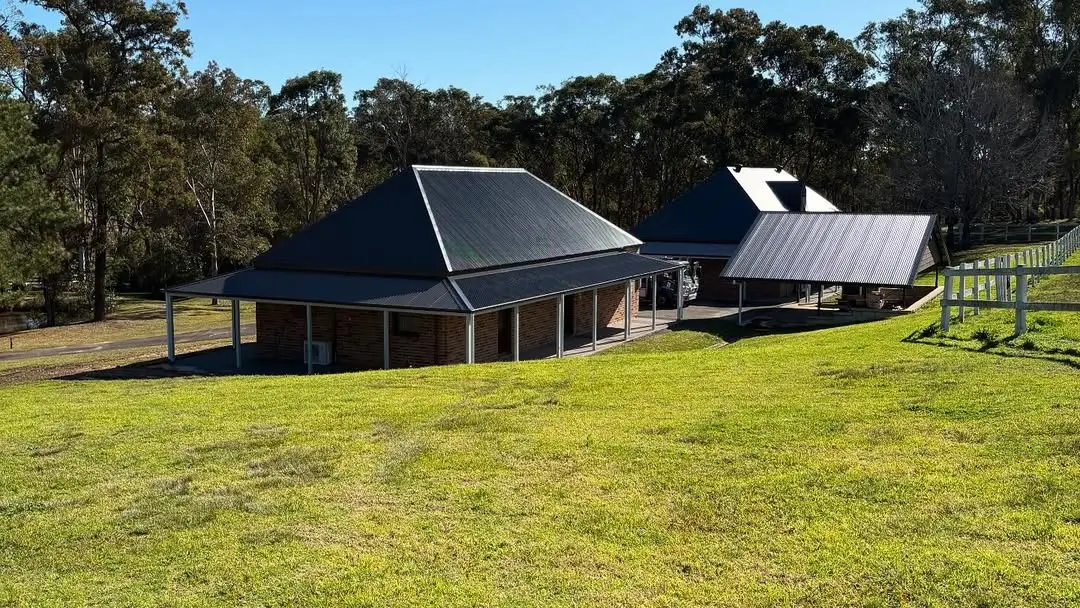
Building here is not the same as building in the Inner West or on the Northern Beaches. The area has specific characteristics that affect design, timelines, and how a project needs to be planned.
Properties in Kurrajong, Glossodia, Bilpin, and parts of Kenthurst often sit on sloped land. A flat block in Rouse Hill is a completely different proposition to a falling block in Kurrajong Heights. Slope affects foundations, retaining walls, access for materials, and the amount of earthwork needed before building even starts. On a steep block, site preparation alone can be a significant portion of the total project cost.
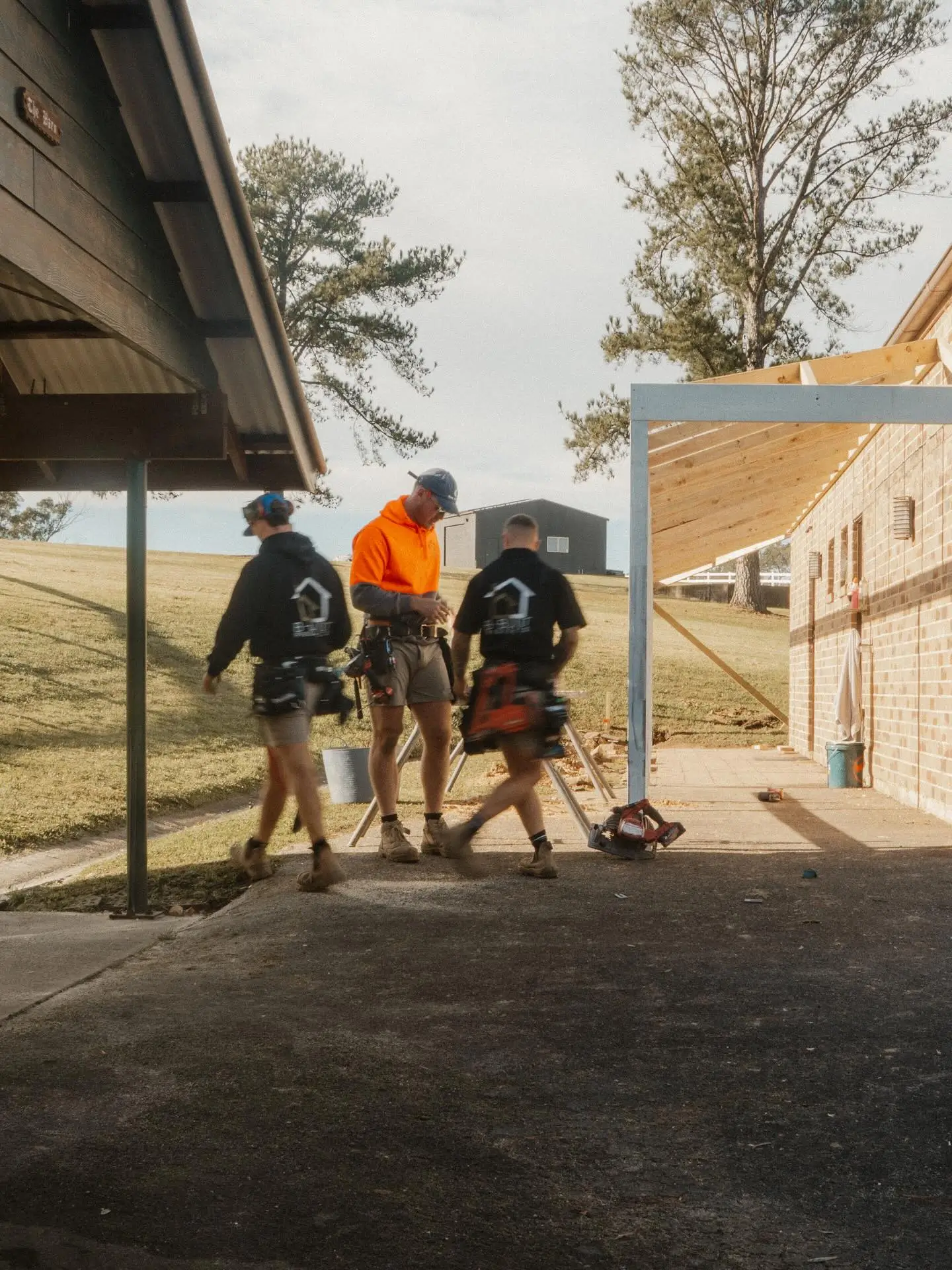
Many properties across the Hawkesbury sit on 2,000sqm to 5-acre lots. That extra space is great for outdoor builds and granny flats, but it also means longer distances for services like water, sewer, and power. Running a sewer line 30 metres across a property is a different job to connecting 5 metres from the house.
Parts of the Hawkesbury are classified as flood-prone. If your property sits in a flood zone, there are additional requirements around floor levels, construction methods, and materials. Some types of development may be restricted entirely depending on the flood classification. This doesn't mean you can't build. It means planning needs to account for it early.
Semi-rural properties in the Hawkesbury, particularly around Kurrajong, Bilpin, Colo, and the edges of the Blue Mountains, may fall within bushfire-prone land. If your block has a BAL (Bushfire Attack Level) rating, construction requirements change. You may need specific materials, ember guards, fire-rated windows, and non-combustible cladding. The higher the BAL rating, the more these requirements affect design and material selection.
Narrow driveways, long access roads, and properties without crane access all affect how a project runs. If a concrete truck can't reach the slab, it needs to be pumped. If materials can't be unloaded close to the build, they need to be moved by hand or with a bobcat. These are common realities on semi-rural blocks and they add to labour time and logistics.
Every council operates a little differently when it comes to approvals. Hawkesbury City Council and The Hills Shire Council each have their own DCP (Development Control Plan) requirements, setback rules, and processing times. Knowing what your council expects before you start saves time and avoids costly changes mid-project. We work in both areas regularly and know the requirements for each.
Renovation costs vary enormously depending on what you're doing. A cosmetic refresh and a full structural renovation are completely different projects, and the gap between them is bigger than most homeowners expect.
The layout. If you keep the walls, plumbing, and electrical where they are, the project stays simpler and more affordable. The moment you start relocating a sink, moving a wall, or changing the floor plan, you're adding plumbing, electrical, engineering, and often council approval to the scope. That's where costs climb quickly.
The age of the home. Older homes across the Hawkesbury, particularly those built before 1990, often carry hidden issues. Asbestos-containing materials are common and require licensed removal. Old wiring, undersized plumbing, and non-compliant framing can all show up once demolition begins. Budget a minimum 15% contingency on any renovation of an older property because there will be surprises behind the walls.
The finish level. The difference between laminate benchtops and stone, between standard tiles and large-format porcelain, between basic tapware and premium fixtures adds up quickly across a full project. You don't need top-of-the-line everything to get a great result, but the choices you make on finishes have a real impact on the final number.
Planning. Projects that are well scoped before construction starts cost less than projects that change direction halfway through. Every variation during a build costs more than if it had been included in the original scope. Getting the plan right upfront is one of the simplest ways to keep a renovation on budget.
Kitchens are the most expensive room per square metre to renovate. The main variables are cabinetry (flat-pack vs custom), benchtop material (laminate vs engineered stone vs natural stone), appliances (standard vs premium), and if you're changing the layout. A kitchen where the sink, cooktop, and fridge stay in the same position is a fundamentally different job to one where you're opening up walls and relocating plumbing and gas.
A full renovation of a 3-bedroom home involves coordinating multiple trades over several months. It typically includes kitchen, bathrooms, flooring, painting, and often some structural work. Our Hawkesbury renovation project involved stripping a 1980s home back to the frame, upgrading the wiring and plumbing to current code, and rebuilding the kitchen, living area, and bathrooms with a completely new layout. That kind of project runs over several months and requires careful sequencing of trades to keep things moving.
The scope can range from a mid-range cosmetic and functional update through to a full structural redesign with premium finishes throughout. The gap between those two outcomes is significant, which is why getting a detailed, itemised quote matters.
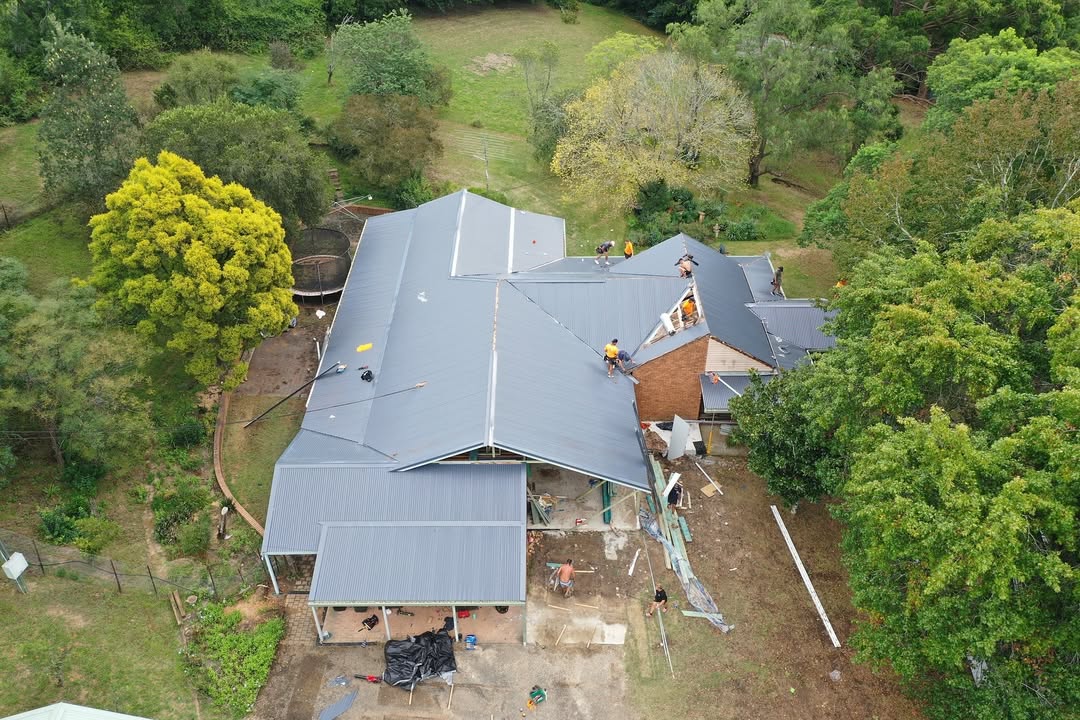
If you need more space but don't want to move, an extension is usually the most practical option.
A ground floor extension adds living space at the same level as the existing house. This might be a new living room, an expanded kitchen, extra bedrooms, or an open-plan redesign. On sloped blocks in the Hawkesbury, ground floor extensions sometimes require retaining walls or cut-and-fill earthworks before building starts. This is an additional step that flat-block extensions don't carry.
We completed a ground floor extension in the Hawkesbury that opened up a closed-off kitchen and living area into a single open-plan space connecting through to a new rear deck. The house went from feeling cramped to having a natural flow from inside to outside. That's the kind of result that changes how a family uses their home every day.
Going up is often the smartest move when you can't go out, or when you want to keep your backyard. But second storey additions are more complex than ground floor work. The existing structure usually needs reinforcing to carry the additional load. Engineering, scaffolding, and weather protection all add to the scope. During a second storey build, you may need to vacate the property for a period of time. Factor temporary accommodation into your planning.
The main variables are size, structural complexity, finish level, and site conditions. A 30sqm rear extension on a flat block with straightforward foundations is a different project to a 60sqm extension on a sloped block that needs retaining walls and upgraded drainage. The finish level matters too. A simple open-plan living area with standard finishes costs less per square metre than a master suite with an ensuite, walk-in robe, and premium joinery.
This is the work we do most often. Outdoor builds are popular across the Hawkesbury and Hills District because the blocks are bigger, the climate suits outdoor living, and a well-built deck or pergola adds genuine value to the property.
The main variables are size, material, height off the ground, and the slope of the block. A 30sqm deck on a flat block is a straightforward build. The same deck on a sloped block with 1.5 metres of fall underneath requires a much larger substructure, which changes the scope and cost significantly.
Our Kurrajong project was an 80sqm Merbau deck with a gabled pergola and custom wraparound stairs. On a rural property like that, the deck completely changed how the outdoor space was used.
If you're planning a deck and thinking about adding a pergola or outdoor kitchen later, it's worth scoping them together from the start. Building in one go saves on site setup, trades coordination, and often materials compared to coming back for a second project down the track.

This comes up in almost every conversation. Here's the honest comparison.
Merbau looks great when freshly oiled. It's warm underfoot, has a rich colour, and is the most affordable hardwood option. But it needs oiling every 12 months, and in the first 6 to 12 months it bleeds tannins, a reddish-brown stain that runs onto concrete, pavers, and anything nearby when it rains. If your deck sits above a concrete path or near a pool, this is something to be aware of before you commit.
Spotted gum is the premium timber option. It bleeds less tannin than Merbau, it's harder, and it has a lighter, more varied grain. It costs more per square metre but is a strong choice if you want natural timber with less maintenance.
Composite decking costs more upfront but needs nothing beyond a wash with soapy water. No oiling, no sanding, no staining. Over 15 to 20 years, composite typically works out cheaper when you account for maintenance. The trade-off is that composite can get hot underfoot in direct summer sun and the look is different to natural timber. Some people prefer it, others don't.
We build in all three. We'll walk you through the options on site and recommend what suits your block, your budget, and how much maintenance you want to do.
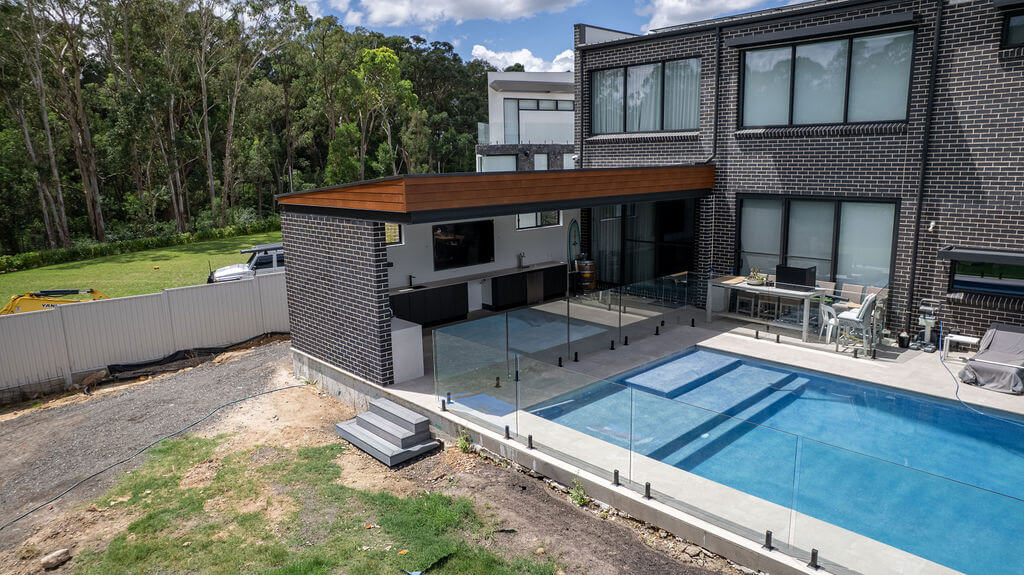
A full outdoor entertaining setup with a built-in BBQ, stone benchtops, sink, and covered seating area is the most common project request we get. The scope can range from a simple BBQ area with a benchtop through to a full outdoor kitchen with cabinetry, rangehood, and integrated seating under a covered pergola.
We recently completed a custom pool house in the Hills District with a full outdoor kitchen, dark cabinetry, rangehood, and timber batten ceiling. That type of build effectively adds another room to the house.
The key with any outdoor entertaining area is how it connects back to the house. If the outdoor space feels separate or bolted on, it doesn't get used as much. We design every outdoor build to flow from the interior so the transition from kitchen or living room to outside feels natural. That might mean matching floor levels, installing bi-fold or stacking doors, or aligning the outdoor kitchen with the internal kitchen layout.
.jpg)
Granny flats are one of the fastest-growing project types across the Hawkesbury and Greater Western Sydney. They work as extra family accommodation, rental income, or a home office separate from the main house.
Under NSW legislation, you can build a secondary dwelling (granny flat) of up to 60sqm on any residential lot of 450sqm or more. In many cases these can be approved through a Complying Development Certificate (CDC), which is faster than a full Development Application.
What affects granny flat costs is the size and layout (1-bed vs 2-bed), the site conditions (flat vs sloped, proximity to services), and the level of fit-out. A granny flat on a flat block 10 metres from the house with existing sewer access is a simpler project than one on a sloped block 40 metres from the nearest connection point. Both are buildable, but the site work involved is very different.

This is one of the most common questions we get, and it's worth understanding before you start planning.
In NSW, some outdoor structures can be built without council approval if they meet all of the following conditions:
If your deck or pergola ticks all of those boxes, it qualifies as exempt development and you can build without lodging plans.
If your project exceeds any of those limits, you'll need either a Complying Development Certificate (CDC) or a full Development Application (DA).
A CDC is a faster approval process (typically 10 to 20 business days) that can be issued by a private certifier. It works for straightforward projects that meet the standard requirements.
A DA goes through your local council and takes longer (often 40 to 60+ business days). It's required for more complex projects, properties in flood zones, heritage areas, or where the design doesn't meet the standard complying development criteria.
We handle the approval process on every project. We know what Hawkesbury City Council and The Hills Shire Council require, and we make sure everything is compliant before we start building. If your project needs a DA, we'll tell you upfront and factor the timeline into the plan.
If your property has a BAL rating or sits in a flood-prone area, additional requirements apply no matter the approval pathway (exempt, CDC, or DA). These requirements affect materials, construction methods, and sometimes what you're allowed to build. We check these overlays early in the planning process so there are no surprises later.
Every block in the Hawkesbury and Hills District is different. The slope, the access, the soil, the orientation, the flood and bushfire overlays. All of it affects what a project involves and how it needs to be built. That's why we come out and look at the site before we give you a number.
If you've got a project in mind, we're happy to walk the block with you and give you a straight answer on what's involved. No obligation, no pressure.
Get in touch: Call Ben on 0422 406 608 or email info@b-builtprojects.com.au
.webp)
Deciding if you should renovate, extend or knock down and rebuild in 2026? Here's how to weigh it up for a Western Sydney, Hawkesbury or Blue Mountains home.
.svg)

Two builders quoted the same job thousands apart? Here's how to read a quote properly, what PC sums and exclusions really mean, and a ten-point checklist for comparing them.
.jpg)
Adding space to your home in the Hawkesbury or Hills District? Here's how building out compares to building up, what your block allows, and what to plan for.
%C2%A0%E2%80%94%20%D0%BA%D0%BE%D0%BF%D0%B8%D1%8F.svg)